I had the honor of preaching at Hope Baptist Church in Mankato, MN last weekend. Below is my manuscript.
Sometimes we have heard a story so many times that the story
begins to take on a new life. Characters become so familiar to us that we
ascribe our own motives and emotions to them. We linger on our favorite parts
of the story and often leave out some important details. Characters who were
meant to be representations become the heroes or are forgotten completely. One
such story I’ve spent a lot of time in lately is the story of David and
Goliath.
My three year old son loves the story of David and Goliath and I fear it is for all the wrong reasons. He likes to act out the battle; however, instead of being the winner of the battle he much prefers to be Goliath. He never pretends to use a sling and a stone, but likes swords and spears and armor. He likes to be the big scary guy that laughs and growls to intimidate others (as much as a 3 year old boy can intimidate anyone). He completely misses the point of the story. But even if he chose to be on the right side of the battle I think he would still miss it.
The story of David and Goliath is so well-known that the basic storyline is known even among most non-Christians. If you break the story down enough it can sound like many other fables we like to share. We love a story of the little guy overcoming insurmountable odds. It makes for great movies. We like to cheer for the underdog in major sporting events. We root for the good guy who seems to have everything in the world going against him. We want the little guy at school to find freedom from the big bully who mocks him across the playground. And we want the meek and gentle good guy to win the girl. These are all “David and Goliath” stories.
But I want to suggest that none of them is truly a David and Goliath story. The hero of the tale is not David. The moral of the story isn’t that God will fight for the good guys. The story is meant to highlight God’s power to overcome all that stands in opposition to his plans. Let’s take a look at the narrative in 1 Samuel chapter 17:
READ 1 Samuel 17:1–54
This story sticks in our minds because the imagery is so vivid that we can very easily see ourselves standing before a 9-foot warrior and trembling in our sneakers. The fear can seem so real because each one of us has experienced or maybe currently faces an obstacle that stands in your way and to even think of moving towards it leaves you fearful. But before going there, let us look at what is happening in this text.
Verses 2 through 7 paint the scene in a large valley with both armies staged on either side preparing for hand-to-hand combat. The circumstances were not pleasant. If you were a soldier in the battle your life could very likely end soon. If you weren’t killed in the battle and the enemy won the battle, you would be taken as a slave away from your family the rest of your life. And opposing the Israelite army was this champion soldier, Goliath of Gath. He towered over every other soldier on the field. He had armor so thick and heavy that no arrow or sword could penetrate it. The body armor itself weighed over 100 pounds. Yet he was so strong that he could move his own weapons without being slowed by it. His spear was likely as long as he was with a head that weighed 15 pounds (think 2 gallons of milk). He was skilled in battle. He feared nothing. He taunted the Israelites knowing that there was no one else who could match his size and military skill.
And his taunts worked to strike fear into the hearts of Israel. They had no chance against such an enemy. They didn’t have the skill. They didn’t have the weapons. And if they failed, they were either dead or slaves in another country.
Then, in verse 12, we are introduced to God’s weapon, little shepherd boy, David. I find the transition from verse 11 to 12 intriguing. After Goliath’s taunts all of Israel was dismayed and greatly afraid. And then we see, “Now David was the son of Jesse.” Wait! What?! What is happening on the battle field. Everyone is afraid and now you are going to tell me a cute little story about a shepherd? But this is God’s plan. He is about to respond to Goliath’s taunts with a humble display of his own power.
This is a good time to pause and consider Goliath’s opposition. Five times we see in chapter 17 a reference to Goliath defying the armies of Israel, both in his own curses and David’s summary of his antagonism. The word “defy” doesn’t simply mean to be opposed or to reject something, but it has a sense of derision to it. Goliath despises Israel and uses his words to express revulsion toward Israel and all of their ways. In a sense he is cursing Israel. This should lead you to think of what God said he would do to those who curse Israel. In Genesis 12:3 God promises Abraham, “I will bless those who bless you, and whoever curses you I will curse.” Surely David remembers this promise when he hears the curses of Goliath.
Even after Abraham, when God was bringing the people into the Promised Land God told them in Deuteronomy 7, ““If you say in your heart, ‘These nations are greater than I. How can I dispossess them?’ you shall not be afraid of them but you shall remember what the LORD your God did to Pharaoh and to all Egypt, the great trials that your eyes saw, the signs, the wonders, the mighty hand, and the outstretched arm, by which the LORD your God brought you out. So will the LORD your God do to all the peoples of whom you are afraid.” David knows that God promised to defeat Israel’s enemies.
He knows that God has a plan to use his people to bring redemption to this broken world and nothing will stop God from enacting his plan. There is nothing special about Israel that God must defend them. In fact it is quite the opposite. God says in Deut. 9:4: “Do not say in your heart, after the LORD your God has thrust them out before you, ‘It is because of my righteousness that the LORD has brought me in to possess this land,’ whereas it is because of the wickedness of these nations that the LORD is driving them out before you.” There is nothing better about Israel (or you and I for that matter) that requires God to protect them from their enemies. It is only because he chose to set his love upon them and provide for them. And he has shown himself faithful to that promise over and over again to do that very thing.
And this is why David charges into battle without fear. Deuteronomy 6 tells parents to teach their children during every waking moment of the day about the promises God has made and the works he has done. As a child of a devout Israelite family, David would know well the works and promises of God. He knows that God promised to protect Israel. He has heard stories past down through the generations how God did protect Israel. And he saw it in his own life when God led him, as verses 34–37 describe, to defeat a lion and a bear to keep his own sheep safe. David did not think that the key to victory was to carefully craft and diligently execute his own plan; he simply trusted in the promises of God.
From here we know the end of the story. Picking up in verse 41where David meets his opponent we see Goliath mocking David, but David isn’t concerned about protecting his own image. One of the five times that we see the word “defy” in this chapter is when David proclaims in verse 45, “You come to me with a sword and with a spear and with a javelin, but I come to you in the name of the LORD of hosts, the God of the armies of Israel, whom you have defied.” Goliath didn’t simply defy Israel when he taunted them, he defied God himself.
This world is God’s. He created it. All of the beauty we see was made to reflect his beauty. People were made to display his love toward one another. People rejected that, yet God is working out his plan through the people of Israel to restore creation to its original splendor. God had chosen Israel not because they were great, but because that is how he thought it best to restore creation by his great power. To defy the instrument of his plan is to defy God himself. David, knowing that nothing can derail God’s purposes, was simply aligning himself with God’s plan in opposing Goliath. He proclaims with confidence in verse 46:
"This day the LORD will deliver you into my hand, and I will strike you down and cut off your head. And I will give the dead bodies of the host of the Philistines this day to the birds of the air and to the wild beasts of the earth, that all the earth may know that there is a God in Israel, and that all this assembly may know that the LORD saves not with sword and spear. For the battle is the LORD’s, and he will give you into our hand."
David knows
that “the battle is the LORD’s.” Nobody can stand against God, not even the
greatest warrior on earth. He simply steps with confidence into God’s
victorious plan. Whatever enemy that stands before him that opposes the will of
God stands no chance against the power of God.
So, what
does this mean to us in this room? Is the story of David and Goliath telling
you simply to face your fears and God will bring down any giant standing before
you? I don’t think so. There are four things I want us to consider when we
think of this story.
1) God is in
control, he has a plan, and nothing will thwart his plan.
2) Man’s greatest
enemy is sin and death.
3) God has
defeated this enemy on the cross.
4) Man can only
be on one side or the other? Which side of the battle do you align yourself
with?
So First, it is important to know that this story is
primarily about God. It is a minor scene in the great narrative of God
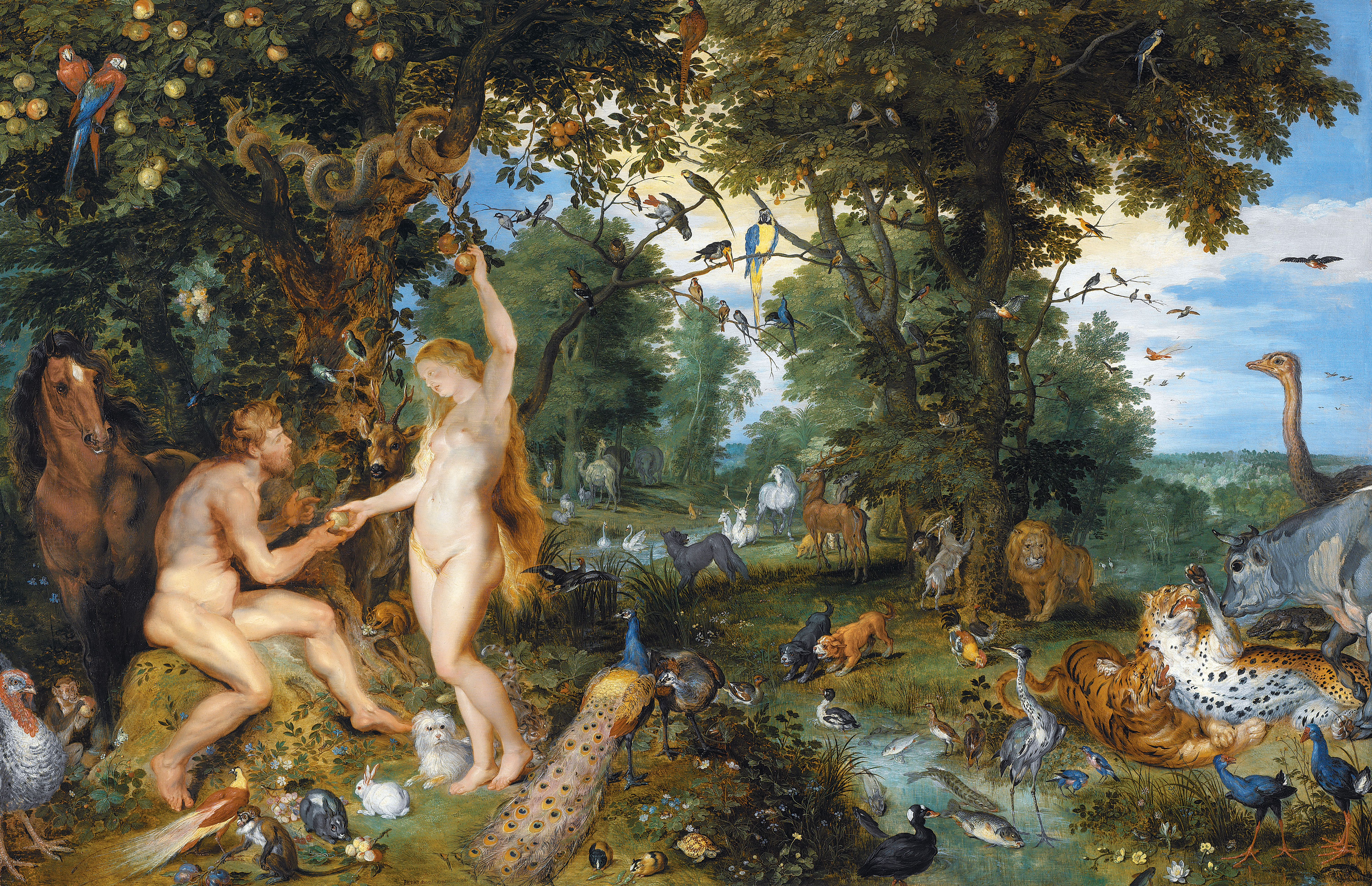
redeeming people from the effects of the fall. God originally made this world
perfect. Adam and Eve lived in the garden and walked with God in perfect
harmony. Life was good. But the first people decided to pursue happiness
without God, flipping the world upside-down, bringing all kinds of pain and
suffering with it. We see these effects everywhere and we repeat the same
mistakes. We cannot blame Adam and Eve when we put other things above God
ourselves. We choose our own path every day. We put ourselves on the throne of
authority over our own lives. And because we are too small, too limited, we do
not have the capability to run our lives as well as God can. But from the beginning
God had a plan to restore things to the way he intended them. The Bible is the
unfolding of God’s plan throughout history.
He promised Adam and Eve that one day one of their children
would be used to crush the enemy and bring restoration (Gen. 3:15). God
revealed more of the plan to Abraham that one of his children would be used to
bless people from every nation (Gen 12:3; 18:18; 22:18). On Mount Sinai God
described to Moses what this redeemer would be like and the type of life that
he would purchase for his people. Through king David God paints a faint picture
of the type of king this redeemer would be over our lives. Every book of the
Bible describes human and satanic attempts to derail God’s plan, but every time
we see how God is still in control to bring his plan to completion.
The story of David and Goliath is another one of these
stories. Goliath dares to stand in the path of God as David says in verse 45
“whom you have defied,” and the story shows that no matter how big the enemy or
no matter how small the weapon of battle, God will accomplish his purposes.
Second, we see in this story that sin is the real enemy. Goliath wasn’t simply being mean to the Israelites; he was defying God himself. Goliath never said, “I curse your God.” But David, knew that his defiance was against God. That is the essence of sin, opposing God. When David himself committed great sin in 2 Samuel 11 by stealing a man’s wife and having her husband killed, he wrote Psalm 51 calling out in repentance to God proclaiming that his sin was primarily against God. Our greatest enemy is not the bully on the playground, the difficult boss at the office, or the financial problems we may be experiencing. Our biggest problem is our own sin, our own lack of trust that God’s ways are the best ways, our lack of enthusiasm for God’s glory.
No matter what we fear we can know that God can overcome
that fear. Essentially, fear is lack of trust in God. When we fear something we
elevate its power above God and the thing itself becomes God. We act in
response to what we fear. Against Goliath, David feared only God and therefore
went head on into battle.
To put it simply, it is a picture of our redeemer overcoming
our ultimate enemy; on the cross Jesus severed the head of sin and death
winning the victory on our behalf. Goliath represents sin and its ultimate end.
Sin stands towering before us leaving us no way out. If we try to overcome sin
in our own power it will eventually destroy us, if not killing us then it will
enslave us.
There are some sins that lead to
death. Some sins will quite literally create illnesses in the mind or body that
will destroy us. Think of all of the diseases and decay that result from an
abuse of sex or drugs. Other sins, however, are more subtle. We lie to cover up
our weaknesses and continue to lie to keep them hidden. We proudly boast in our
goodness to keep other people from seeing our faults. These types of sins tempt
us with happiness and pleasure, but as the pleasures wear off they require more
commitment to avoid their immediate consequences. Eventually we are addicted to
the sins and we can’t imagine life without them, we begin to believe they are
necessary for survival, and we define who we are by them. It is a deep pit that
we can’t climb out of because most of the time we don’t even realize we are in
it.
Third, it may not be obvious at first, but the point
of the David and Goliath story is to point you to Jesus as the means to that
victory. All it takes is a small instrument like David in the hands of a powerful
God to bring down a giant sin. At the time of Christ there was nothing glorious
about a cross. It was an instrument of torture for the worst of criminals. What
an offense it would be for the Savior to be killed on a cross! What a joke it
would have been for a dirty shepherd boy to be the instrument of Israel’s
salvation against its greatest enemy. But God uses the foolish things in the
world to shame the wise and the powerful. On the cross Jesus defeated the power
of sin and death, dropping it to its knees and cutting off its head.
Even the place where Jesus was
crucified may have a more explicit connection to David and Goliath than we
think. The place was named “Golgotha” or the place of the skull. Nobody has
been able to find any historical documentation on how that place got that name.
Some might speculate that it was because so many had been executed there. My
Old Testament professor wondered if it wasn’t a reference to David and Goliath.
David not only drops the giant Goliath to the ground, but he cuts off his head
in verse 51 and carries the head to Jerusalem as a trophy of God’s victory over
their enemy. Perhaps Golgotha is short for Goliath of Gath. This would suggest
that David’s defeat of Goliath was simply a foreshadow of God’s greater victory
over sin to come when Jesus died on the cross.
And finally, however, this victory over our giant enemy, sin, doesn’t apply to everyone. At the great battle against the Philistines there were many who were destroyed along with Goliath. Even the king of Israel, Saul, did not submit himself to the authority of God and eventually lost his position and even his life. Those who will be saved will be those who, like David, align themselves with the will of God, those who submit to Christ’s authority, those who fear God more than man. The New Testament terms for this are “repentance” and “faith.”
To repent means to turn away from your previous desires,
your previous patterns of life. It means to reject everything about your own
plan for your life, to despise who you are apart from Christ. When you are
repenting you are looking at the giant of sin that stands before you and saying
with desperate plea, “I can’t do this! I am weak. I am tired. I have nothing to
give in this battle.”
And by faith, then, we put our trust
in the power of God to slay the giant. Faith is trust in his promises to redeem
his people. It is believing his plan to restore everything and wipe away sin
and death. Faith is placing all our hope on Jesus’ death on the cross as a
sufficient payment for our sins and in his resurrection as the promise that one
day sin will be completely removed from our world.
If you have not yet repented and
put your faith in Christ, see the message of David and Goliath as a warning
that God will defeat all those who oppose him. He will one day cast sin and
death and all who cling to their sin into eternal darkness. But on the cross he
provides a way out. All who believe in him will be spared from that fate.
Whatever addiction or fear towers over you that you cannot seem to defeat, God
is able to slay that giant and willing to do so on behalf of those who trust in
him through Christ.
But the gospel message isn’t just
how we get saved, it is the truth by which believers live. The giants don’t all
instantly go away once we choose to step onto God’s side of the battle. God
doesn’t simply fight the battles for us making life easier for us. We need to
face every sin that confronts us and attack it with the truth that Christ
conquered it on the cross.
The story of David and Goliath
doesn’t teach us to buck up, devise a plan, and resolve to defeat the giant
with our own determination. Our strategy is to confess our weakness to God and
move forward in trust that he has given us the power of his Holy Spirit and the
fellowship of his church to overcome any temptation. And the battle keeps on
going until the day we leave this world. David faced many struggles after he
defeated the giant. He fell into great sin, but he repented of it with great
weeping and mourning and called out to God to give him the joy of salvation
from the giant of sin which was far bigger than Goliath.
The first of Martin Luther’s 95
theses said that when Jesus commanded us to repent, he meant that our lives
would be marked with continual repentance. So I leave you today with a great
call to arms in your soul. There is a battle going on with sin. John Owen said,
“Be killing sin or it will be killing you.” Engage the battle, not by creating
clever tricks or plans by which you can avoid sin or pretend it is not a threat.
Face it with the power of the cross. Repent! Call out to God to be merciful to
you and by the blood of Christ give you the power to overcome sin. And put all
your faith in the one who slayed the giant Goliath and crushed sin’s skull at
Golgotha.